


By Rafi Moshe, founder of StoriedLife.
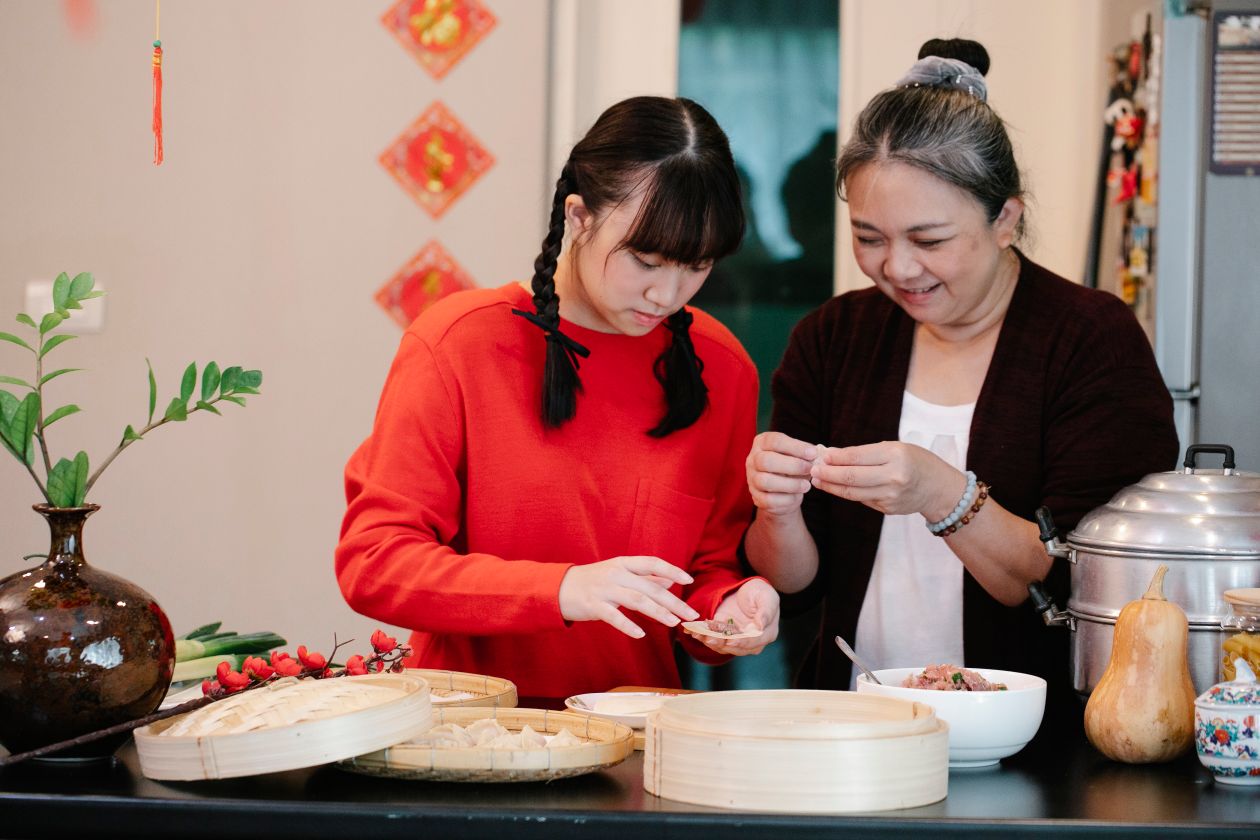
A family recipe book is not really about the recipes. Ingredients can be found anywhere. What can’t be replaced is the rest of it: who taught her to make the soup, why the dumplings are folded that way and no other, what the kitchen looked like the Christmas the power went out and dinner happened by candlelight anyway. This guide covers the whole build: collecting recipes from the oldest cooks first, keeping their handwriting, photographing the dishes and the people, organising the book so a grandchild can actually cook from it, and finishing with homemade gifts for grandparents that carry memory rather than clutter.
Collect recipes like stories, starting with the oldest cooks
Begin with the generation that cooks from memory, because that is where the unwritten recipes live. Call, visit, sit in the kitchen. A shared document or a short questionnaire helps relatives who live far away, but the best material comes out of conversation, not forms.
Ask about dishes the way you’d ask about a life, with open questions. What was your favourite dish growing up? Who taught you to cook? What did your mother make when money was tight, and what did she make when there was something to celebrate? Which dish do people request from you, and when did you first make it? Our questions to ask your grandma and the 100 questions to ask your parents both have food woven through them, because food is where family memory hides.
Expect the real recipes to arrive in a private unit system: a handful of flour, a knob of butter, cook it until it’s done. Don’t argue with the units. Cook the dish together once, measuring as you go, and write down what her hands already know. That cooking session, with the corrections and the gossip, is usually the best interview of the whole project.
Put the story at the top of the page
Every recipe in the book gets a short introduction before the ingredients: who made this dish, when it appeared, and one thing that happened around it. Three or four sentences are enough. The soup that got a shy grandfather through a winter of unemployment. The cake that failed at a wedding and got served anyway, renamed. The dish that travelled from one country to another in a suitcase, written on the back of an envelope.
This is not decoration. Genealogy researchers point out that for many women in a family’s past, the kitchen was the record they left: their skill, their thrift, their celebrations survive in what they cooked long after their letters are gone. A recipe book that keeps the stories is a family history that happens to be edible.
Keep the format steady (story, then recipe, in the cook’s own words where you can) and the book reads as one family’s voice rather than a stack of printouts.
Keep the handwriting, and print a typed twin beside it
If a recipe exists on a card, a scrap of paper, or the flyleaf of an old cookbook, scan it or photograph it flat, in daylight, and print the handwriting in the book exactly as it is. The crossings-out matter. So do the splashes. A card in your grandmother’s hand is an heirloom that fits on a page.
Beside it, print a clean typed version with the measurements you worked out together, in the order a cook actually uses them. Handwriting is for keeping; type is for cooking from, with flour on your hands, in bad light, twenty years from now. The pair of them on facing pages is the heart of the whole book.
Photograph the dishes, the cooks and the table
You don’t need a photo of everything. You need a good photo of each signature dish, taken the day it’s made, in the pot or on the plate it is always served in. Photograph the cook’s hands doing the thing only she does: folding, kneading, tasting off the spoon. And photograph the table at least once, mid-meal, people and all. Future readers will look for faces first and food second.
Phone photos are fine. Wipe the lens, use window light, and skip the filters: a recipe book is a record, not an advertisement.
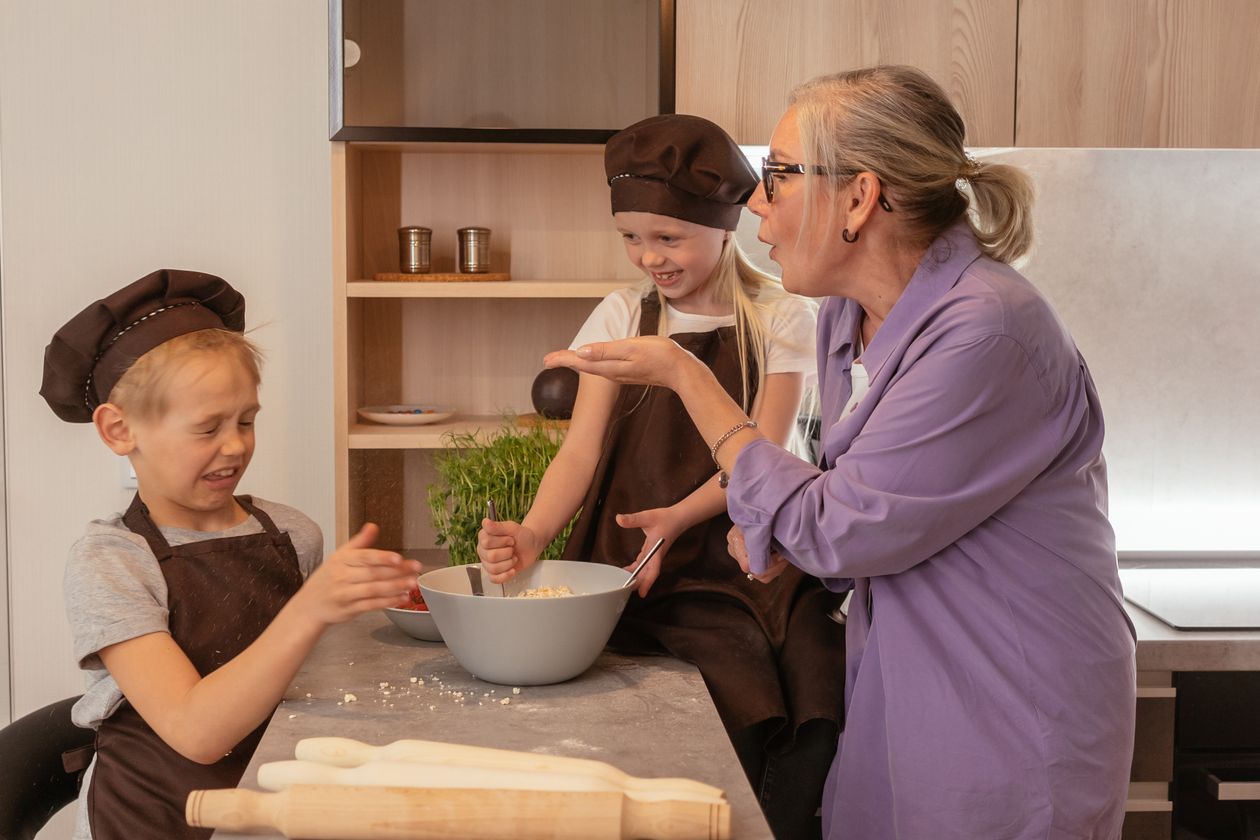
Building the family recipe book
Organise by course (soups, mains, baking, preserves) if the book is meant for cooking from, or by occasion (weeknights, holidays, celebrations) if it’s meant for reading. Add a table of contents either way, and an index by dish and by main ingredient, because the person hunting for “the chicken with the lemons” will not remember which chapter you filed it under. Leave one section at the back marked “to try”: recipes collected but not yet cooked, and blank space for the next generation to start adding theirs.
Where a service like StoriedLife fits is the story layer. The interview that pulls a recipe out of a cook also pulls out everything around it: the country she left, the neighbour who taught her, the year the recipe changed. Eva, our AI biographer, has that conversation, follows up the way a good interviewer does, and turns it into a written story, with the recipe sitting inside the chapter where it belongs. Stories and photos are printed in a colour book of up to 300 pages (more in our how it works walkthrough). Plenty of families build the working recipe binder by hand and let the printed book carry the stories. Both books earn their shelf space.
Homemade gifts for grandparents that carry memory
The same thinking fixes the hardest gift problem in most families: grandparents who say they want nothing, in a house that is already full. The gifts that land are the ones carrying a specific memory. The gifts that fail are generic, however much they cost. Our gift guide makes the same argument for bought gifts; here is the homemade version.
Make it from something that already means something. Ornaments sewn from a worn-out family quilt or a grandfather’s shirts. A favourite saying of hers, lettered onto wood from the old fence or the barn board. A framed copy of her own handwritten recipe card, the original safely scanned first. Materials with a past do half the emotional work before you add any skill.
Give the book back to the cook. The strongest version of this whole article as a gift: interview your grandmother across a few weeks, build her recipes and stories into a printed book, and give it to her on her birthday, in front of the family. She is the author; you were just organised. Present it at a gathering rather than handing it over in a box, and let the arguing about dates and ingredients begin. That argument is the sound of the book working.
Apply the shelf test. Before you make anything, ask where it will live. A memory gift passes if it will be used (the recipe binder), displayed (the framed card) or read (the book). If the honest answer is “in a drawer”, make something smaller, or make the book instead. Grandparents keep gifts that tell them they were listened to. They quietly donate the rest, and they’re right to.
Start with one conversation. The recipes are in her head, and the stories are too. Eva asks the questions, follows up, and turns the answers into stories you can keep and print. The first stories are free, and there is no card to enter. Start a free conversation with Eva.
Frequently asked questions
How do I get a usable recipe from someone who cooks by feel?
Cook the dish together and measure as you go. Write down her handful in grams or cups the one time you stand beside her, and note the signs she uses (colour, smell, the way the dough feels). One shared cooking session usually produces a recipe that works and a story to go with it.
Should a family recipe book include the original handwritten cards?
Yes, scanned or photographed and printed beside a clean typed version. The handwriting, crossings-out and all, is the heirloom. The typed version is what grandchildren will actually cook from in twenty years.
How should I organise a family recipe book?
By course if it will be cooked from, by occasion if it will be read. Either way, add a table of contents and an index by dish and main ingredient, and leave a “to try” section at the back for recipes still waiting their turn.
What photos belong in a family recipe book?
One good photo of each signature dish, the cook’s hands at work, and the table mid-meal with people in it. Faces matter more than food styling. Use window light, skip filters, and photograph dishes on the day they’re made.
What homemade gift do grandparents actually keep?
The one that carries a specific memory: something made from family material, a framed copy of her own recipe card, or a printed book of her recipes and stories with her as the author. If a gift will be used, displayed or read, it passes. If it would live in a drawer, make the book instead.
Sources
Sources, all checked in October 2026:
- Collecting family recipes, with the Library of Congress cookbook collection as the model: Library of Congress, Minerva’s Kaleidoscope: How to Collect Family Recipes
- Cookbooks as objects of family memory: Metacritic Journal, Family Cookbooks: Objects of Family Memory
- Why shared family stories matter for the next generation: University of Nevada, Reno Extension, Family Storytelling and the Benefits for Children